
Introducing Linked Accounts
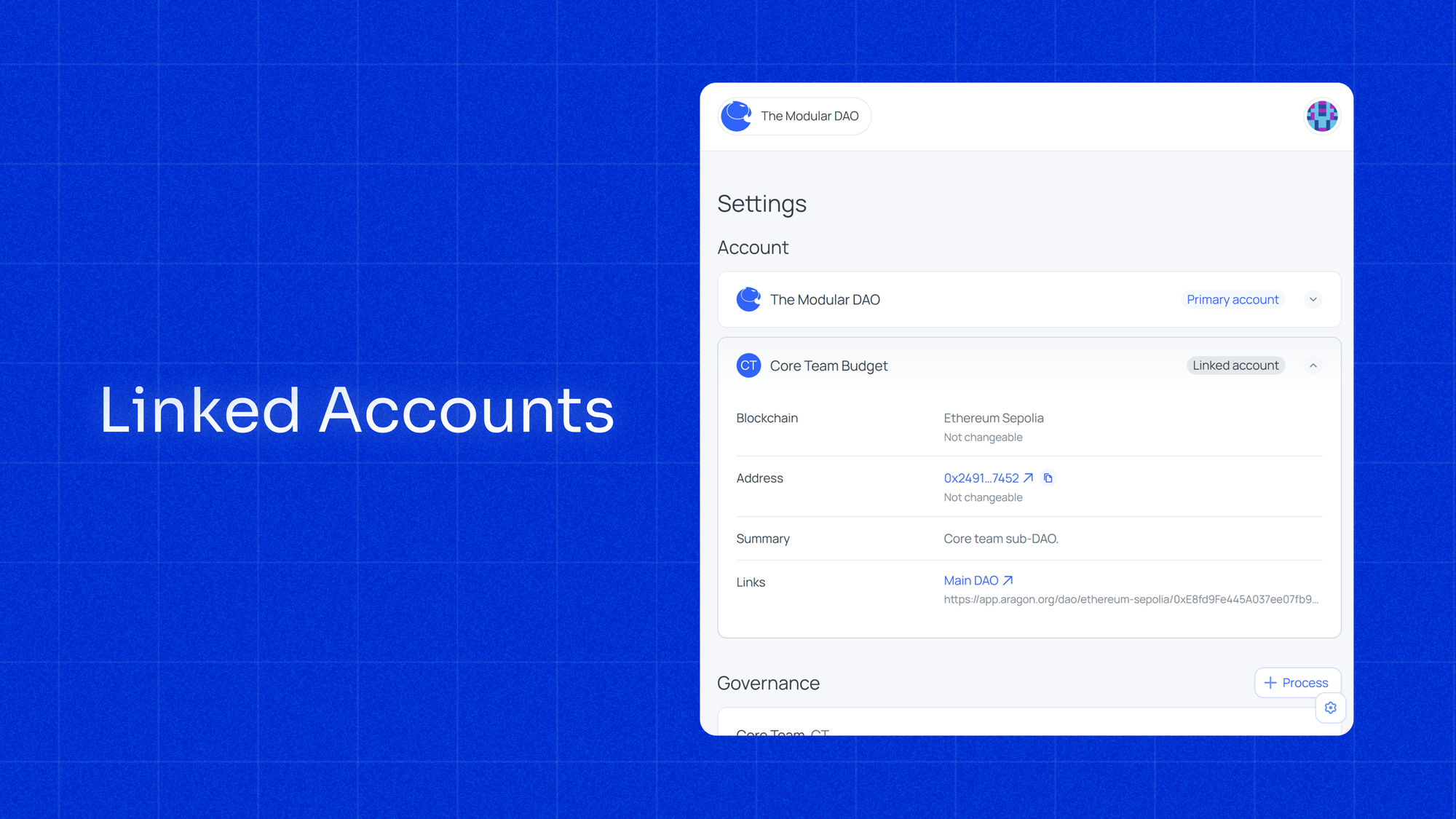
Organizations don’t normally operate from a single undifferentiated treasury.
Different funds serve different purposes and involve different stakeholders. An operations team may need a dedicated budget for payroll and vendors. Protocol revenue may be allocated to rewards and incentives. Other funds may be reserved for grants, buybacks, or long-term reserves.
Onchain, however, these funds often sit within a single treasury account. When everything lives in one place, teams rely on manual accounting to track which funds are meant for what, and stakeholders have limited visibility into how capital is actually allocated.
We built Linked Accounts to solve this.
Linked Accounts allow an organization to segment funds into separate accounts while presenting them as a single coherent organization. Funds can be intentionally allocated into purpose-specific accounts, while governance and treasury visibility remain unified within the same interface.
The result is a simple improvement: funds remain segregated by purpose, while the organization can still operate and understand its finances as a whole.
What’s New
Purpose-specific treasury accounts
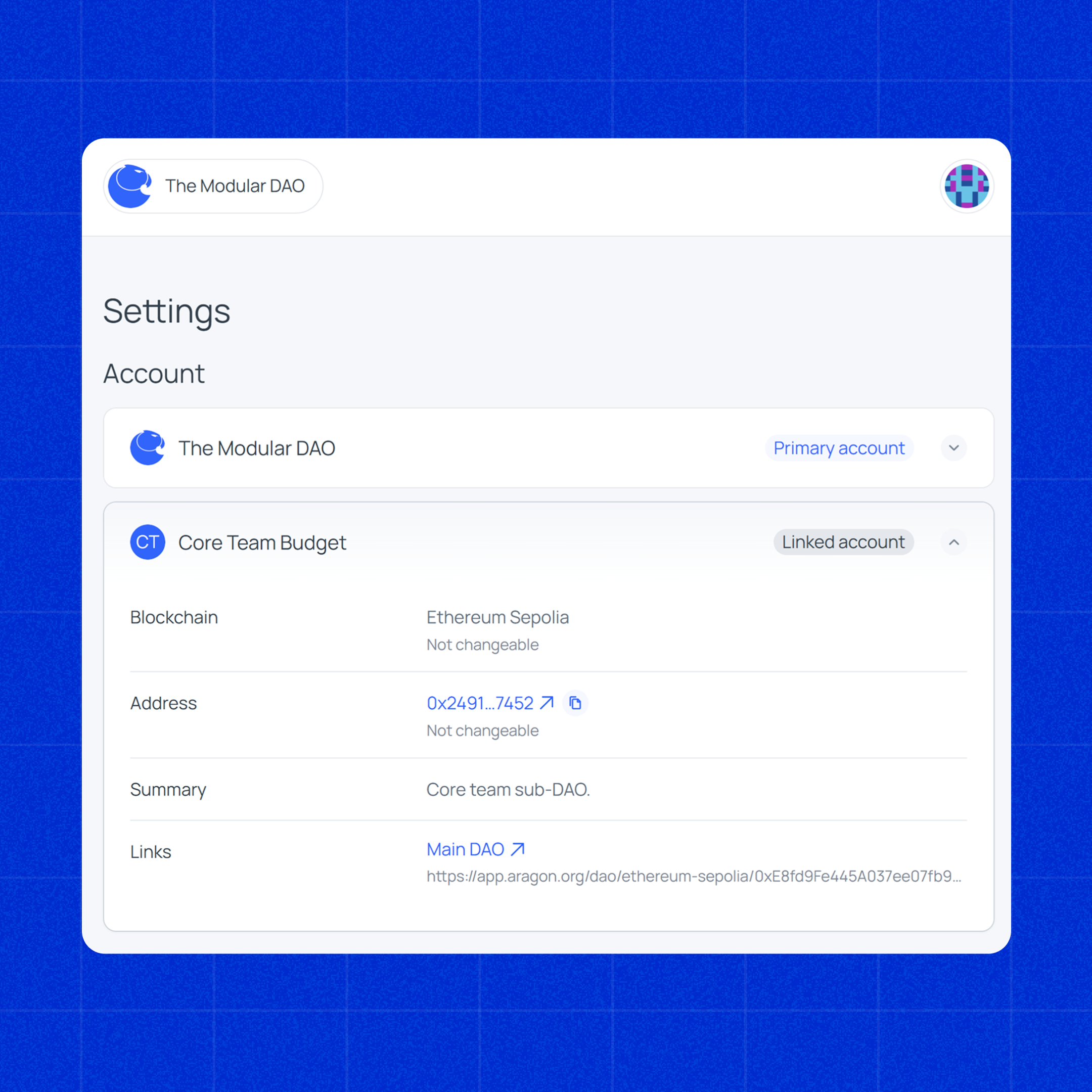
Organizations can separate funds into different accounts depending on their role. For example, an operations budget, a rewards pool, or a grants program.
Each account maintains its own governance and permissions while still appearing as part of the same organization.
Unified treasury view
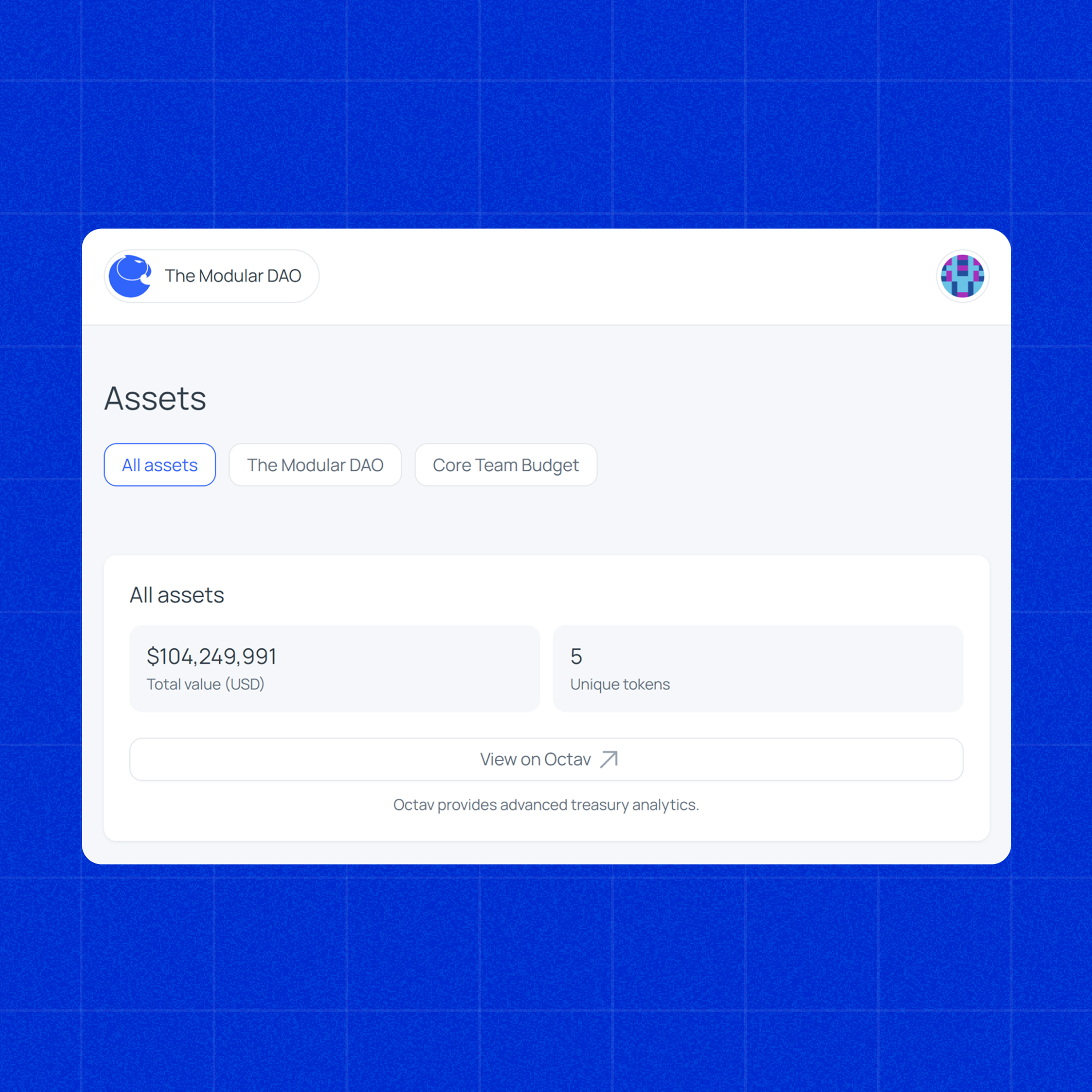
The dashboard aggregates balances across linked accounts so participants can see the full financial picture without manually reconciling transaction categories.
At the same time, users can drill down into each account to see its specific balances and transaction history.
Smart proposal handling
Each linked account maintains its own set of granular permissions. When creating proposals, the interface automatically filters the actions that are available for the selected account.
This prevents proposals from attempting actions that the account cannot execute and makes it easier for teams to work across multiple accounts.
How It Works
Linking accounts does not require deploying new smart contracts.
Instead, the relationship between accounts is established through bi-directional onchain acknowledgement, which allows multiple accounts to be treated as a single operational structure within the interface.
Both accounts must explicitly acknowledge the relationship. This prevents spam or impersonation and ensures that the connection is intentional.
Importantly, autonomy is preserved. Each organization remains a smart contract executor with its own permissions system. Linking accounts does not transfer control unless permissions are deliberately changed through governance.
What’s Next
Linked Accounts also create a foundation for policy-driven financial automation.
When funds are separated into purpose-specific accounts, the role of each pool becomes explicit in the system itself. This makes it easier for automated mechanisms to act on those funds without needing to interpret governance intent from arbitrary calldata.
For example, a percentage of protocol revenue can be allocated into a dedicated rewards account where distribution mechanisms operate autonomously. The same structure can support buybacks, burns, or other automated capital flows, while remaining visible within the organization’s broader treasury.
Over time, this structure allows organizations to implement financial policies that are easier to understand, operate, and automate.
Get Started
Teams interested in setting up their onchain operations with Linked Accounts can reach out to the Aragon team for help configuring their system.
For organizations exploring automated capital flows such as policy-driven buybacks, rewards distribution, or other financial mechanisms, Linked Accounts provide the structural foundation for implementing these systems. If this is something your organization is considering, reach out to the Aragon team to explore what we are building.